Story
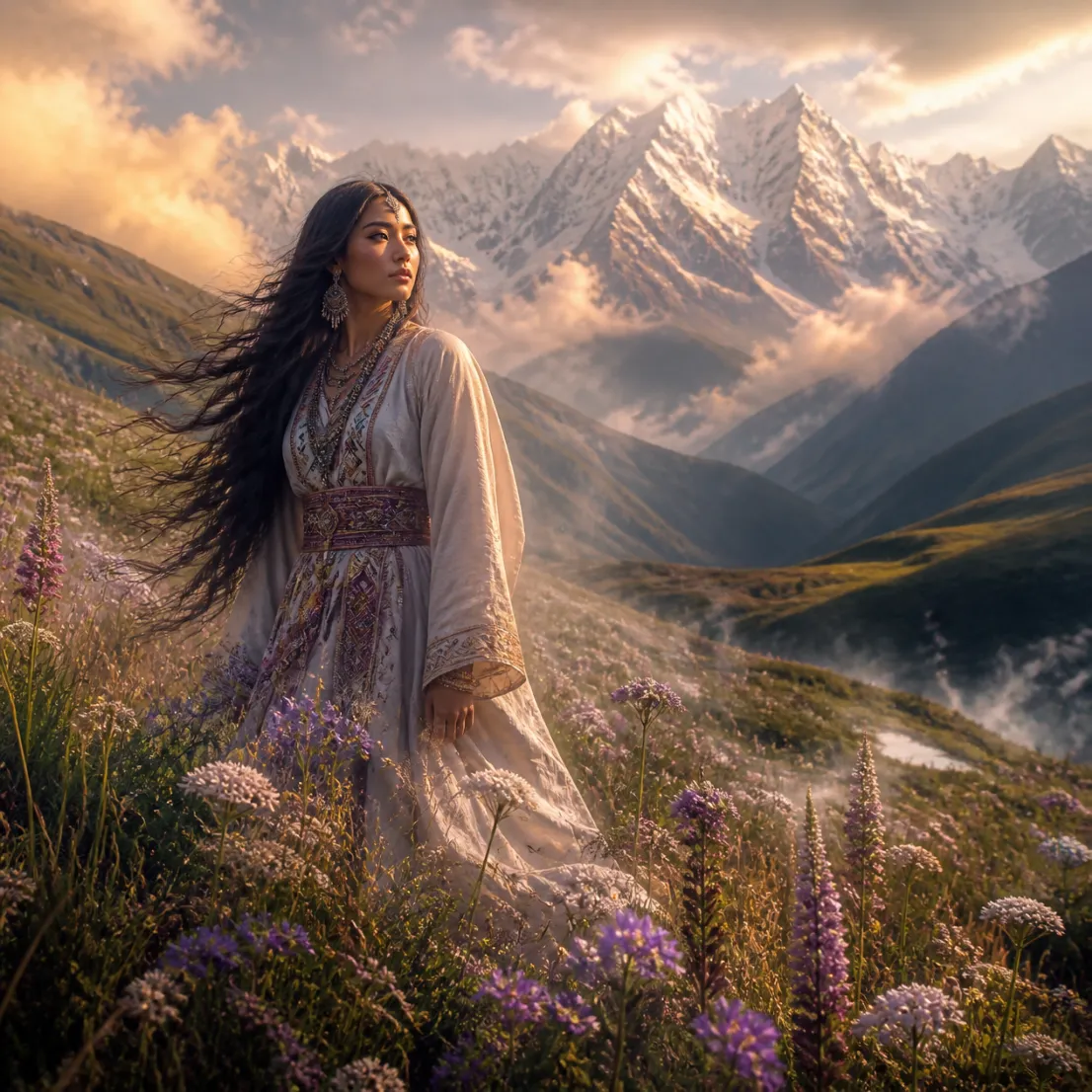
A bull that was not a bull, a god who dove into the ground, and five temples where his hump, arms, face, navel and hair are worshipped still - the Panch Kedar story of Kedarnath, Tungnath, Rudranath, Madmaheshwar and Kalpeshwar.
The war that would not let them sleep
The Pandava brothers had won everything. Their cousins, the Kauravas, lay dead on the field of Kurukshetra; the kingdom was theirs again; the war they had tried every compromise to avoid was over. And none of them could sleep. The epic is blunt about why: they had killed their own kin - gotra hatya - and along the way, teachers, elders and priests whose deaths stain the killer even when the cause is just. Victory had left them wealthy and unpardonable at the same time.
There is only one being whose touch washes away that particular stain, and he is Shiva. Krishna's advice to the brothers, as the telling goes, was to give up the kingdom and go and find him. So the five brothers handed everything over and walked east to Varanasi - Kashi, Shiva's own city, where the god is easier to meet than almost anywhere on earth. They prayed there. Nothing moved. Shiva, the legend says, was deeply displeased with the dishonesty and death of that war, and did not intend to be found by the men who had caused it.
The bull that was not a bull
When a god will not come to you in his city, you go to where he hides. The brothers turned back into the Himalaya, into the hills of Garhwal - Kedarkhand, the land of Kedar, which our history of Uttarakhand follows in its worldly chapters. And here, near a valley town that now carries the memory in its very name - Guptakashi, the hidden Kashi - Shiva changed shape. He became a bull, and he joined a herd, and he grazed like he had every intention of staying a bull forever.
Bhima, the strongest of the five, stood astride two mountains and looked down at the herd. One animal was wrong. It was too still, too deliberate, and it watched them back. Bhima walked down and caught it by its tail and its hind legs - and the bull drove itself straight into the earth. The ground closed over the god. Where the bull had been, only a conical hump of rock stood out of the hillside.
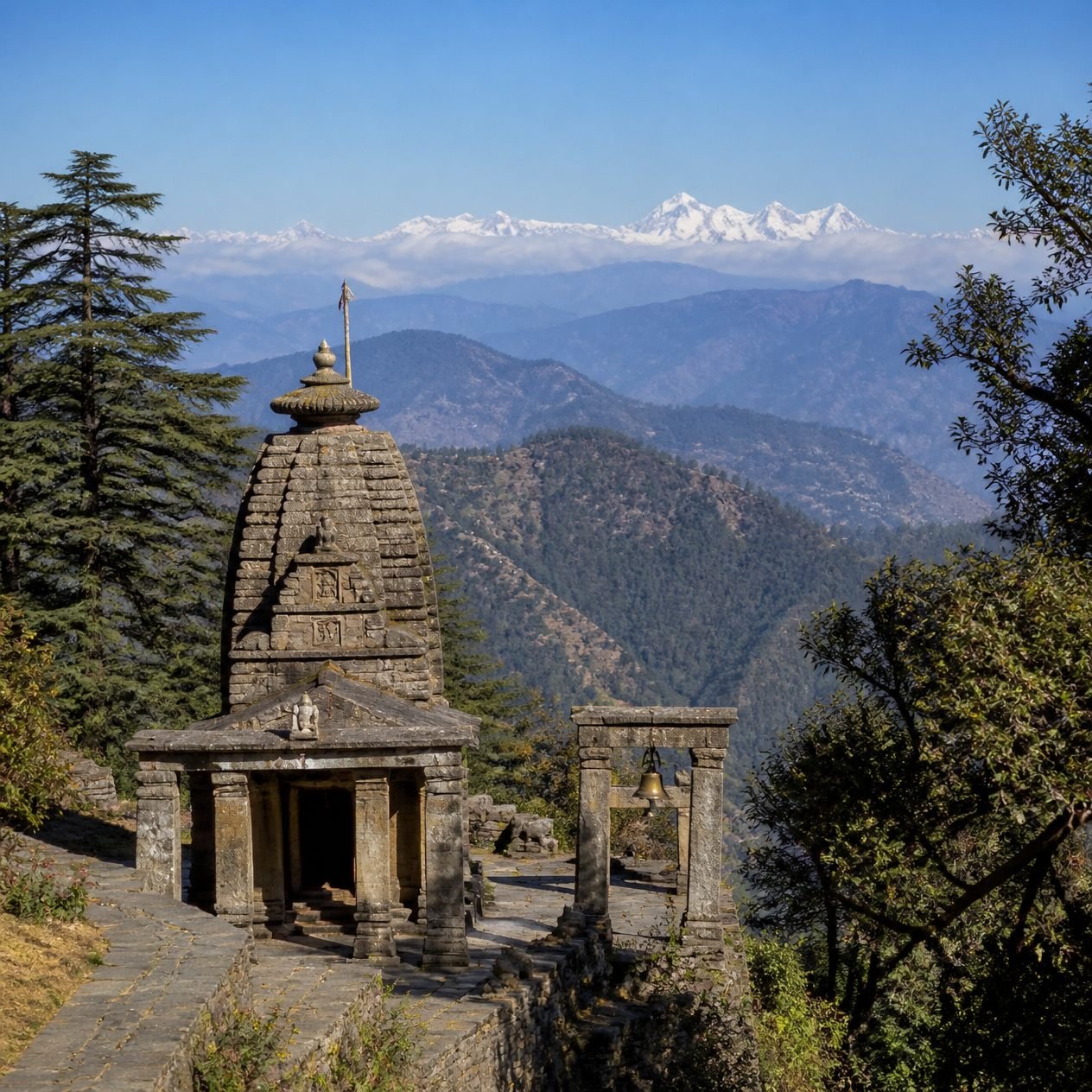
That was not the end, but the scattering. The god resurfaced in five places, each a different part of the bull he had been: the hump at Kedarnath, the arms at Tungnath, the face at Rudranath, the navel and stomach at Madmaheshwar, the matted hair at Kalpeshwar. The Pandavas raised a temple at each one, and Shiva, satisfied at last that his seekers had found what they were actually looking for - not victory, but release - forgave them. Some tellings add a sixth part: the throat, they say, fell on the Kedarkantha peak; and Nepal completes the animal entirely, worshipping the head as Pashupatinath in Kathmandu.
One honest note before we go further. The Mahabharata itself never mentions Kedarnath. This story comes from the Kedarkhand, a section of the Skanda Purana devoted to this region, and from a thousand years of telling it in the valleys - which is its own kind of truth. The hills have carried this story for so long that the landscape and the legend have grown into each other, and anyone who walks these trails soon stops asking which one came first.
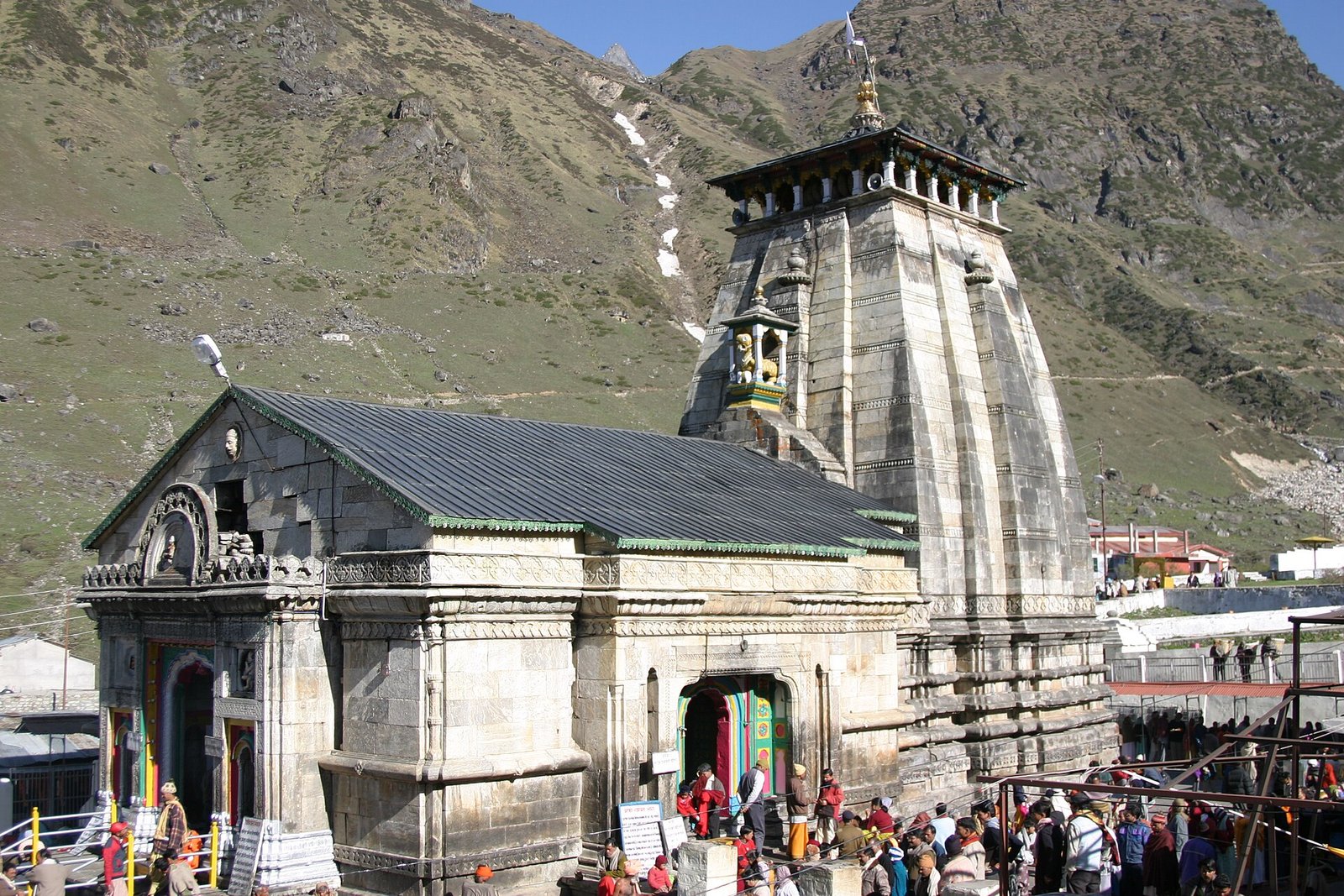
Kedarnath: the hump
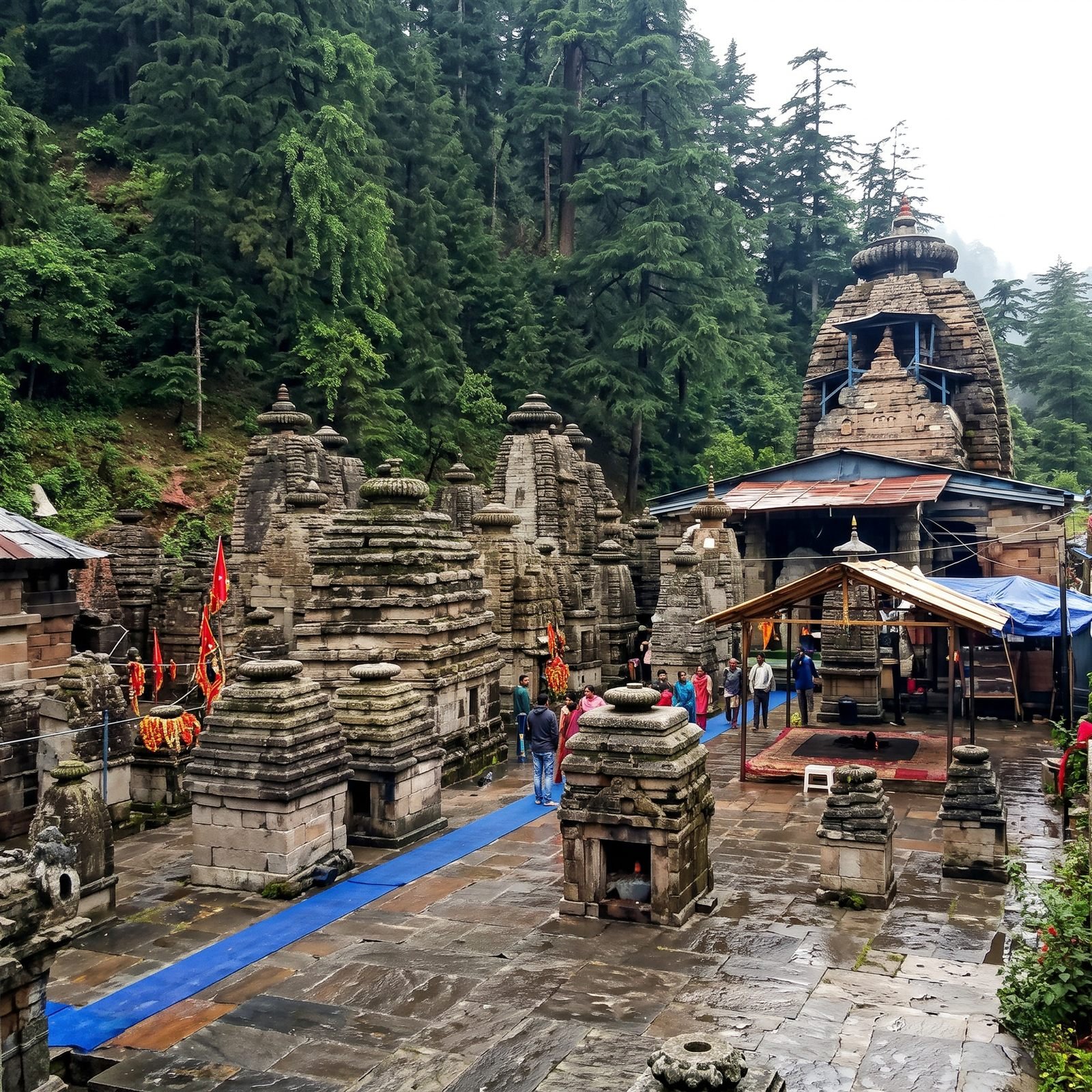
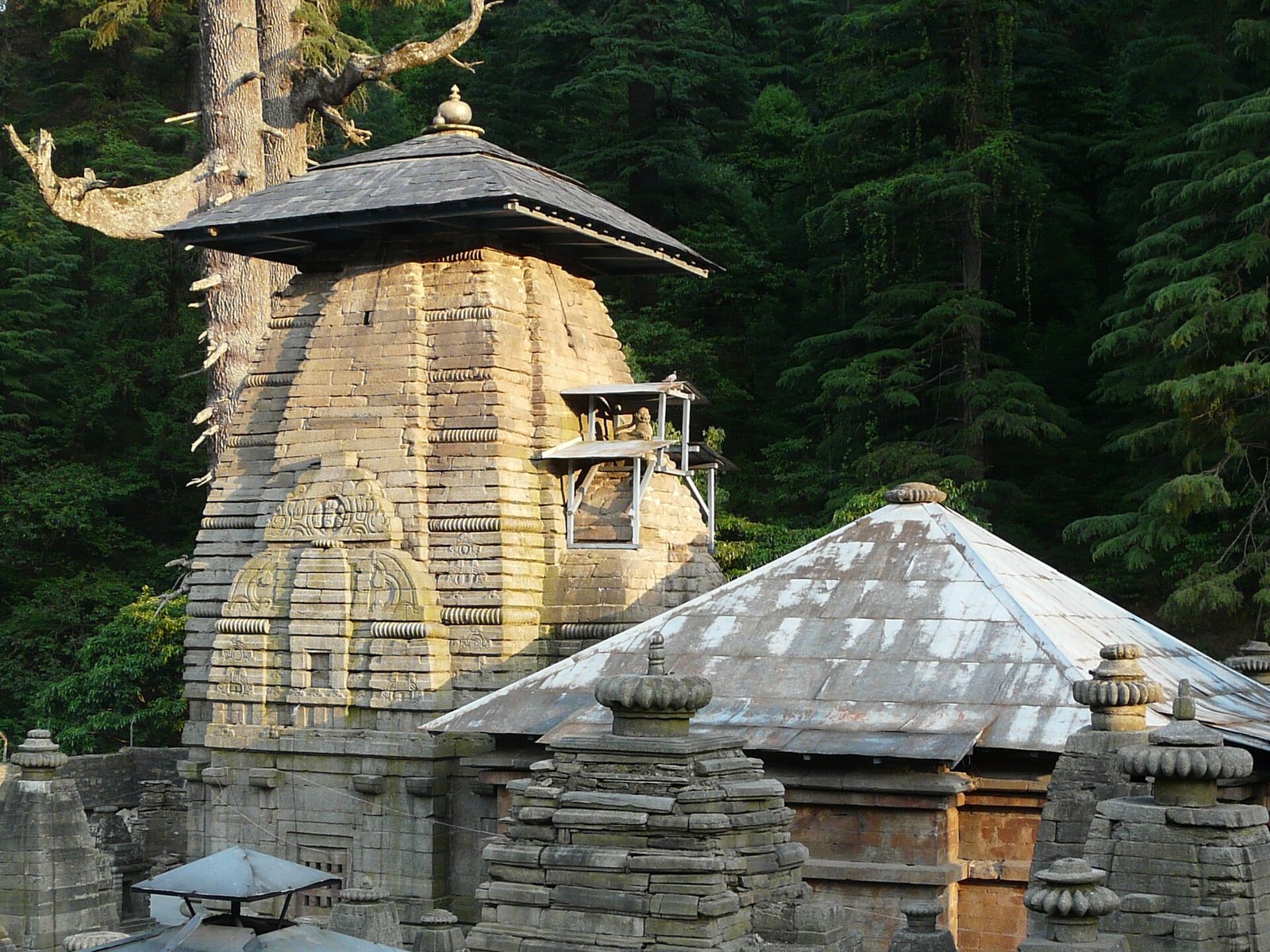
The head of the Panch Kedar is also one of the twelve jyotirlingas - the twelve great shrines of Shiva on the subcontinent - and the only one of the five that holds that rank. The temple stands at 3,583 metres in a stone bowl of a valley, and it is built the old mountain way: massive slabs of grey stone fitted without mortar, a temple that looks less raised than grown, with a stone Nandi waiting outside the door. Inside the sanctum is not a carved linga but the conical rock itself - the hump the legend left in the ground. Our Kedarnath guide covers the practical side: the 16 km walk up from Gaurikund, the kapat opening around Akshaya Tritiya in late April, and the closing on Kartik Purnima in November, when the temple shuts and the deity travels downhill to winter at Ukhimath.
Two more things belong to this place. The first is Adi Shankara, the philosopher who walked this entire region in the 8th-9th century and tied its temples into one sacred geography - tradition holds that it was Shankara who established worship here, and a memorial behind the temple is revered as his resting place. The second is June 16, 2013, when the flood came down the valley with the force of a collapsing sky and took everything built around the shrine except the shrine itself. A boulder the size of a house - now called Bhim Shila - came with the water and parked itself directly behind the temple, splitting the flood around it. Whatever you believe about that stone, the pilgrims who queued to touch it after the water receded understood the old story perfectly: in Kedarkhand, the god decides what stays.
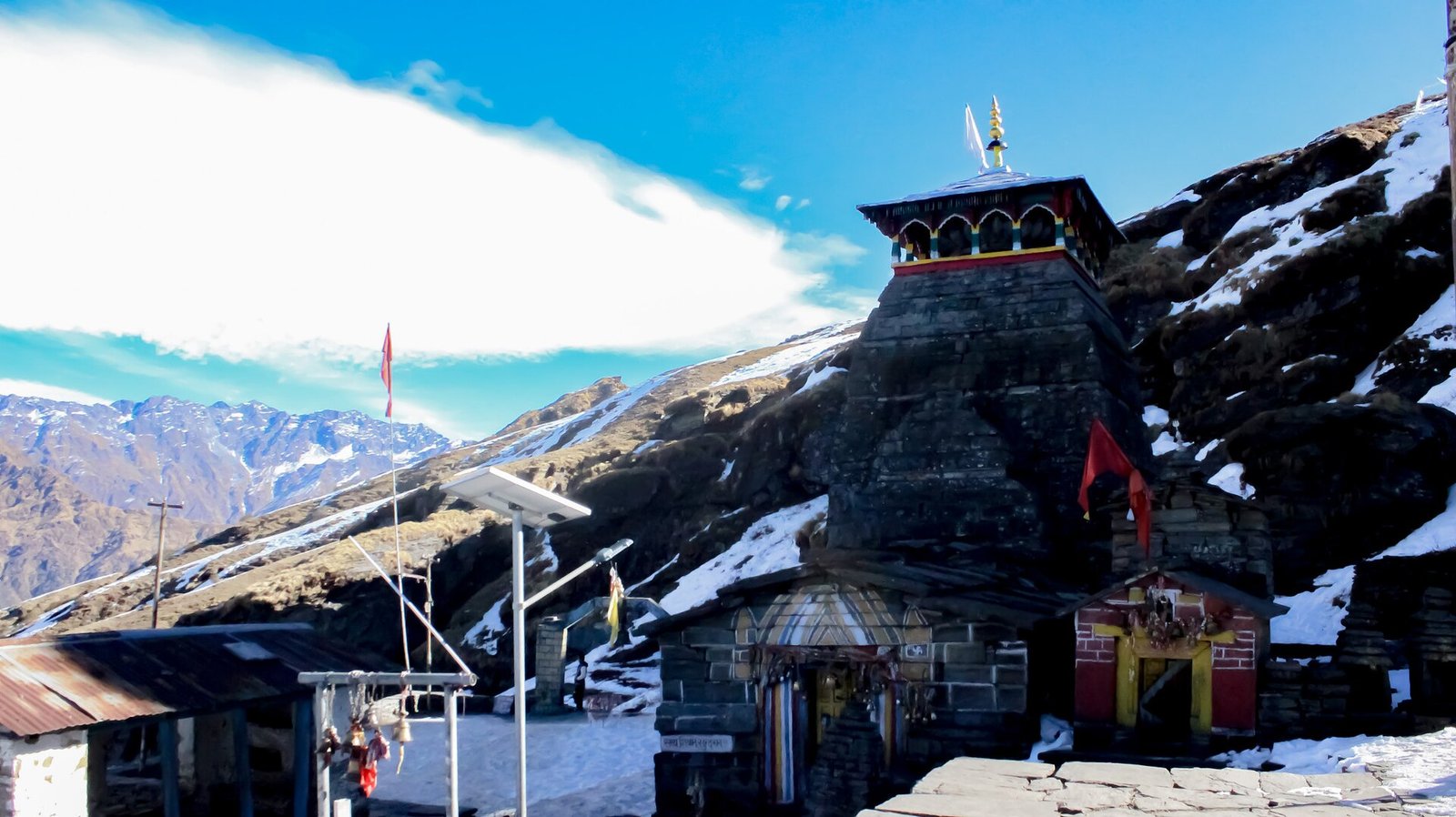
Tungnath: the arms, on the highest ridge
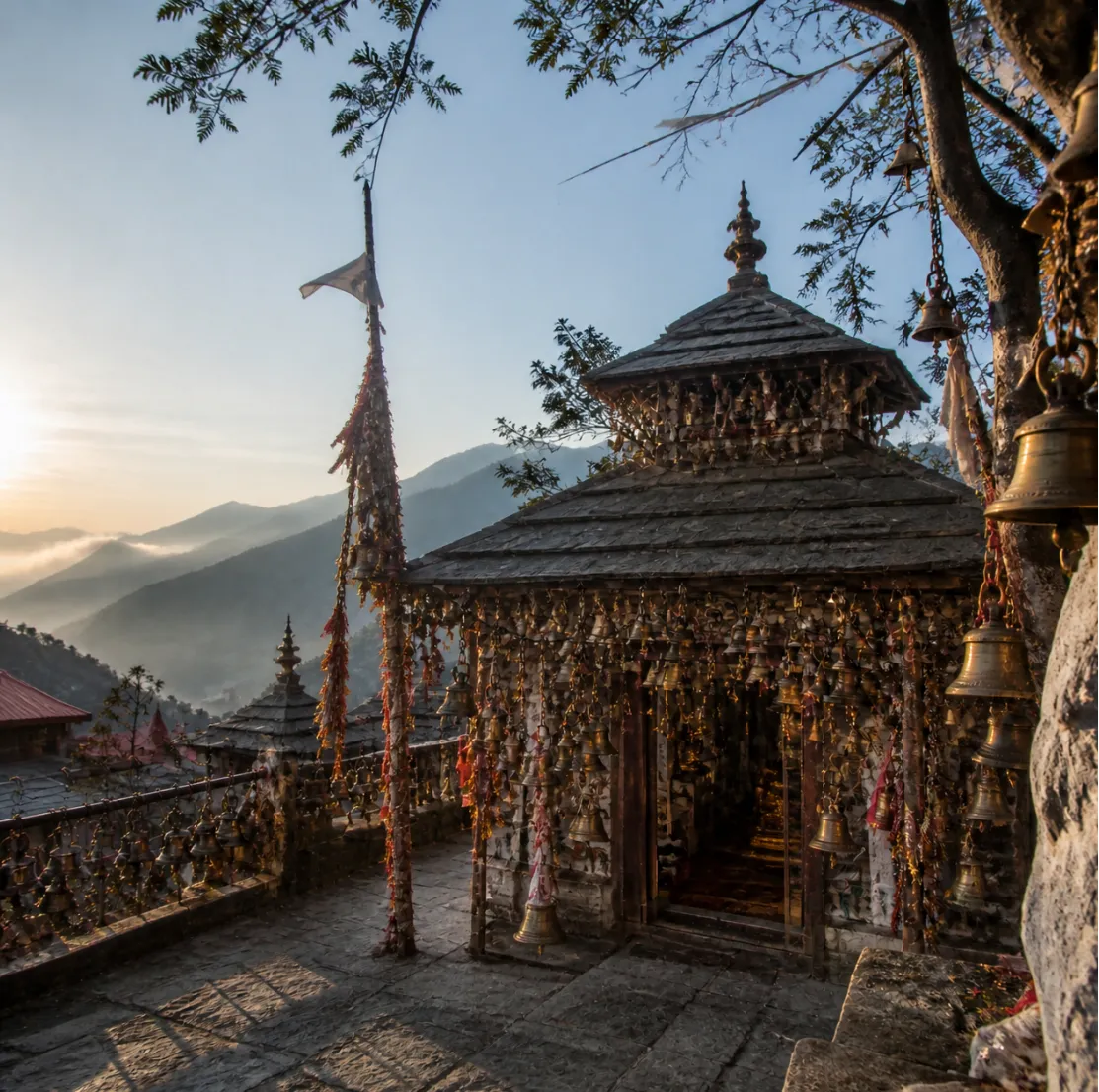
From Kedarnath the yatra climbs higher still. Tungnath sits at 3,680 metres on the ridge above Chopta, and it is held to be the highest temple of Shiva in the world - the arms of the bull, worshipped in a small stone temple that watches the dawn come up over Chaukhamba and the great Garhwal peaks. It is also the easiest of the five to reach, which is why it may be the one you actually walk: the trail leaves the road at Chopta, climbs a stone path for 3 to 3.5 km, and arrives in about two hours. Almost every traveller who has stood there at sunrise will tell you the same thing - it does not feel like the easiest of anything. Our Chopta guide has the full picture, including the further hour to the 4,000-metre grass summit of Chandrashila above the temple.
In winter Tungnath closes with everything else, and its deity moves down to Makkumath, the village that keeps the god for the cold months. The temple reopens when the snow line retreats - the season the rest of the yatra follows.
Rudranath: the face in the living meadows
Rudranath is the yatra's test. The face of Shiva is worshipped here, in a temple set into natural rock at about 3,559 metres, ringed by the high bugyal meadows that make this stretch of Chamoli famous - and reaching it means a trek of roughly 20 km through dense forest from Sagar village, up trails that see a fraction of Kedarnath's traffic. The reward is a view that the crowded shrines cannot give: from the temple front you look straight at Nanda Devi and Trishul, the two great guardians of this part of the Himalaya. Those who have done the walk describe Rudranath as the Panch Kedar's quiet heart - you earn it, and the earning is the point. If the idea of a twenty-kilometre forest day appeals to you, read our trekking guide before you go; this is not a route to walk unprepared.
Madmaheshwar: the navel, under Chaukhamba
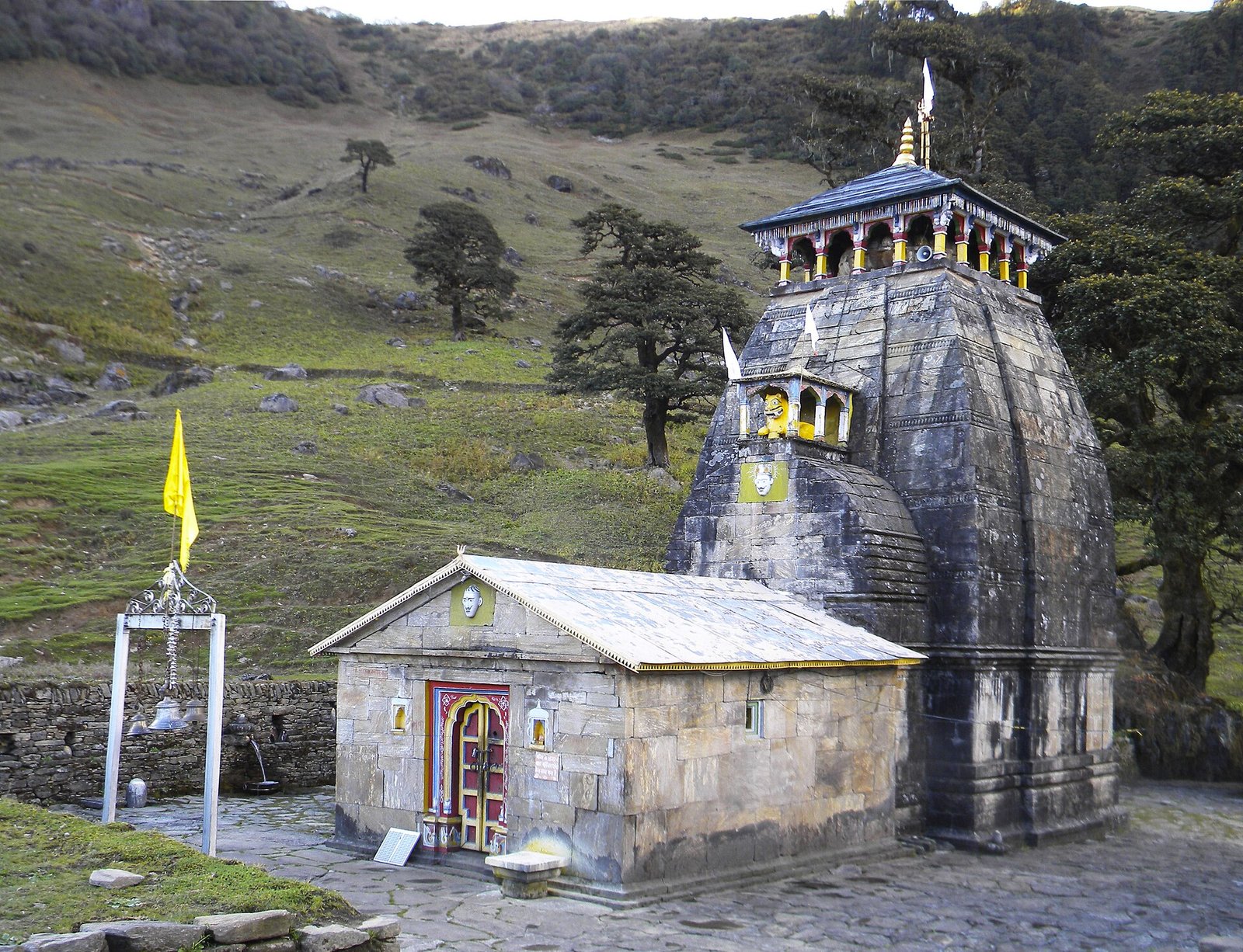
The fourth temple holds the navel and stomach of the bull - the centre of the god, set at 3,490 metres directly beneath the Chaukhamba massif, whose four pillars of snow dominate every view from the village. Madmaheshwar is reached by a 16-18 km trek from Ransi village near Ukhimath, a steady climb through forest and over ridges into a green valley bowl that feels deliberately hidden. Beside the main temple stand two smaller shrines, one for Parvati and one in the Ardhanarishwara form - half Shiva, half Parvati - and down in the valley the arms of the great peaks close the horizon. Pilgrims are expected from May to November, and in the winter months the deity joins Kedarnath's at Ukhimath.
Kalpeshwar: the hair, and the one that never closes
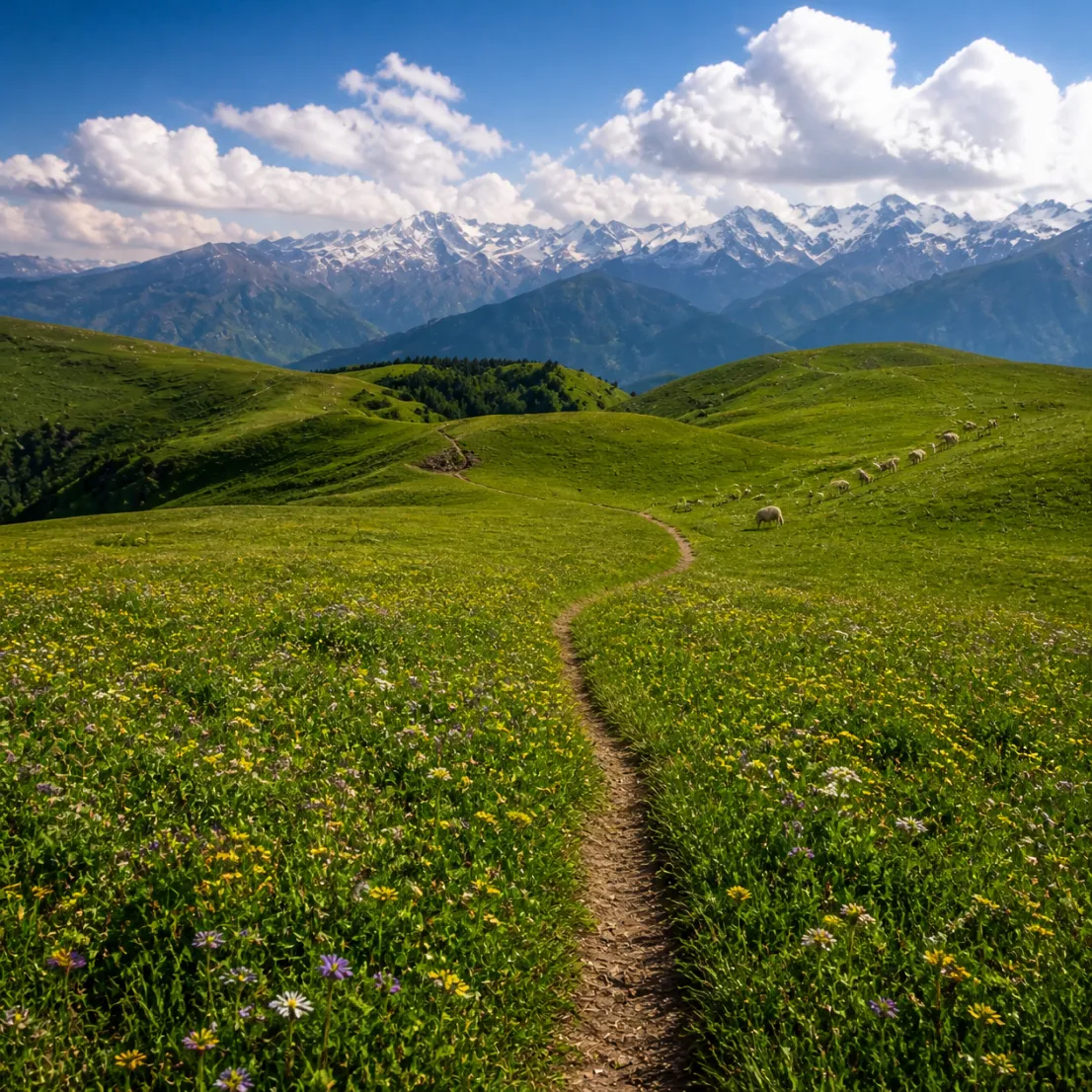
The last of the five is the gentlest. Kalpeshwar, at about 2,200 metres in the Urgam valley, holds Shiva's matted hair - the jata - in a small temple reached by a short walk from the roadhead, past fields and village courtyards rather than switchbacks. It is the only one of the Panch Kedar open through the year, because the snow that closes the other four never really holds here. Pilgrims who time their yatra to the shoulder seasons finish at Kalpeshwar when the high temples are shut; locals finish there whenever they like. The Urgam valley has another reason to slow down: it is potato country and old Bhotiya trade territory, a working valley rather than a pilgrimage stage set - the same lived-in mountain culture our aanchhri story wanders through.
Walking the yatra today
The traditional order follows the god's own pecking order: Kedarnath first, then Tungnath, then Rudranath, then Madmaheshwar, and Kalpeshwar last. In practice, most travellers take the five in two or three trips, because the shrines sit in three different valleys - Kedarnath and Madmaheshwar off the Rudraprayag-Ukhimath side, Tungnath and Rudranath on the Chopta-Gopeshwar side, Kalpeshwar past Joshimath near Badrinath. A compact first taste is the Chopta-Tungnath weekend; the full circuit is a season's project and, honestly, a stronger experience for it. If you are planning around the closing dates, our winter packing guide covers what the high Himalaya does to unprepared luggage between November and April.
What is worth saying to any traveller is this: the Panch Kedar is not a checklist of five temples, it is one story walked in five directions. The treks are the grammar of the legend - you are, quite literally, tracing the places where a god chose to reappear, in a landscape where rock, meadow and shrine have agreed to mean the same thing for over a thousand years. Walk it slowly, carry your own weight, and let the hills make the schedule. That is how the five brothers did it, and the hills have not changed the rules since.
“By the mere sight of these five, even the sin-born are made pure. - Kedara Kalpa, Kedarkhand of the Skanda Purana (translated)”
“The god who hid from the Pandavas now hides in plain sight - at the top of a climb.”
Questions
Questions people ask about this story
What is the Panch Kedar?
The Panch Kedar are five Shiva temples in the Garhwal Himalaya of Uttarakhand: Kedarnath, Tungnath, Rudranath, Madmaheshwar and Kalpeshwar. Legend says each marks a place where Shiva reappeared in part after hiding from the Pandavas as a bull - the hump, arms, face, navel and hair respectively.
What is the story behind Kedarnath temple?
After the Kurukshetra war, the Pandavas sought Shiva to wash away the sin of killing their kin. Shiva hid from them in the Garhwal hills as a bull. Near Guptakashi, Bhima caught the bull by its tail and hind legs, and the god sank into the ground - leaving the conical hump of rock worshipped in the Kedarnath sanctum today.
Which is the highest Shiva temple in the world?
Tungnath, at about 3,680 metres in Rudraprayag district, is held to be the highest temple of Shiva in the world. It stands a 3 to 3.5 km climb above Chopta, and the grass summit of Chandrashila lies another hour above the temple.
What is the correct order to visit the Panch Kedar?
The traditional yatra order is Kedarnath, then Tungnath, then Rudranath, then Madmaheshwar, and Kalpeshwar last. The shrines sit in different valleys, so most travellers spread the five across two or three trips rather than one continuous circuit.
Which Panch Kedar temple is open all year?
Kalpeshwar, at about 2,200 metres in the Urgam valley, is the only one of the five open through the year - the snow that closes the others never holds there. Kedarnath, Tungnath, Rudranath and Madmaheshwar typically close from November and reopen from late April or May; Kedarnath's and Tungnath's deities winter at Ukhimath and Makkumath respectively.
How difficult is the Panch Kedar yatra?
It ranges from easy to serious: Tungnath is a 3-3.5 km climb from Chopta and Kalpeshwar a short walk; Kedarnath is a 16 km trek from Gaurikund and Madmaheshwar 16-18 km from Ransi; Rudranath is the hardest at roughly 20 km through dense forest from Sagar village. All except Kalpeshwar sit above 3,400 metres, so altitude and weather planning matter.